And so, with the arrival of January and the start of the new calendar year, vineyard and vine maintenance begins anew.
The first task is winter pruning, also known as dry pruning or pruning on the bare wood, because it is done when the plant has shed its foliage. This procedure sets the vine’s initial course—the cut from which the new wine vintage will emerge. Vegetative growth is still a long way off, but it’s important to prepare the vine optimally.
What is the purpose of winter pruning?
First and foremost, the goal is to renew the plant’s fruiting parts. The grapevine, like all fruit-bearing plants, bears fruit primarily on one-year-old wood—that is, on wood derived from a shoot from the previous year which, after completing a growth cycle, matures and lignifies, becoming the basis for the generation of new shoots.
In the traditional pruning system used in Piedmont, known as Guyot, only one of the old shoots—that is, the so-called former lignified shoots—is left, which will be used as the new fruiting leader. Generally, it is always one of those closest to the vine stock.
This technique involves removing most of the vine’s branches, except for the thickest and strongest one—that is, the branch designated for fruit production. The fruiting shoot will support up to nine buds, which will produce new shoots and, consequently, new bunches of grapes. For this reason, as a preventive measure, it is good practice to identify a spur—that is, a section of shoot with two buds—which, if necessary, can serve as an alternative for the plant’s structural growth.
When is the best time to prune grapevines?
Winter pruning can be done over a broad timeframe, ranging from early December to mid-March—that is, the period when the plant is dormant. The decision to start or delay this process may also depend on whether weather conditions during the fall months were favorable or unfavorable.
Beyond this consideration, it would be advisable to always delay the start slightly, as it is preferable to fully respect the vine’s natural rhythms and cycles. In fact, it is widely believed that showing greater respect for the plant can pay off significantly in the long run, helping it produce higher quality fruit—especially in a crop like the grapevine, whose average lifespan is estimated to be around 30–40 years.
What is the next step?
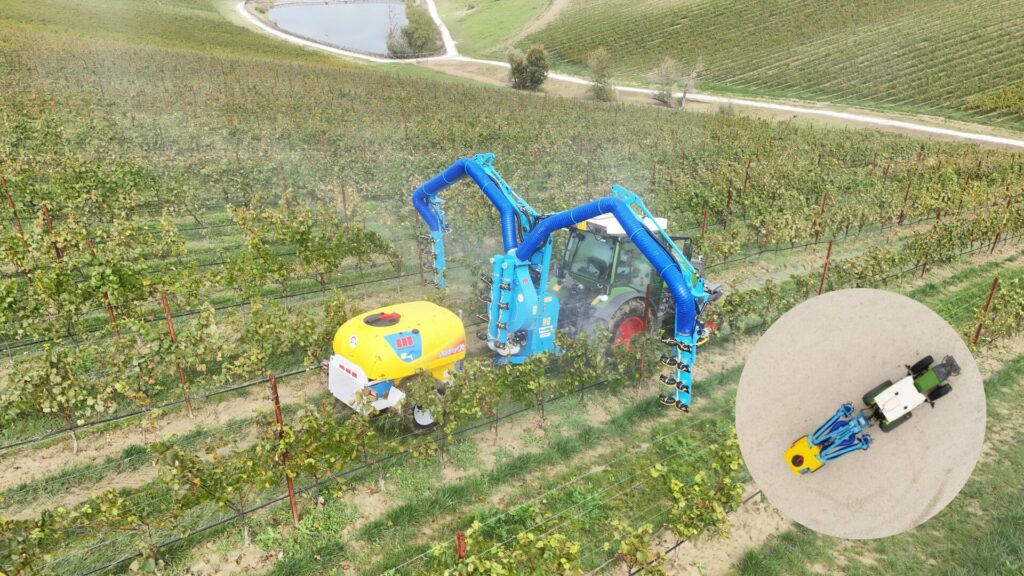
After winter pruning, when the main species are in full vegetative dormancy, it is standard practice to apply insecticides, fungicides, and, in particular, fungicides to prevent attacks by phomopsis and eriophyids. Grapevine escoriosis, or cortical necrosis, is a fungal disease caused by Phomopsis viticola; this disease affects all parts of the plant, manifesting primarily on the shoots. Chemical treatments yield good results when applied at the beginning of the growing season, before the onset of rain that can spread the disease. As for the grapevine eriophyid mite, fungicide treatments using sulfur are normally sufficient to control this pest.